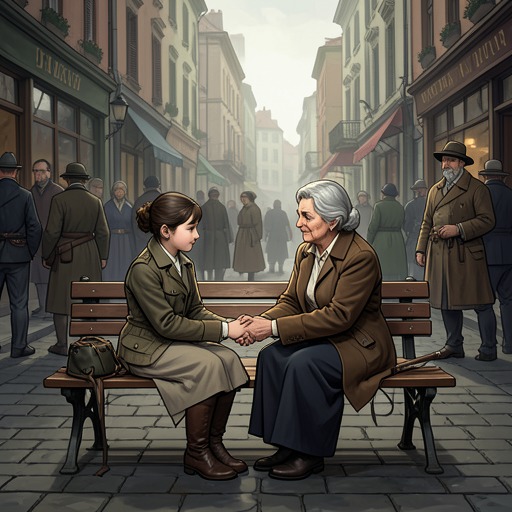
Rosario Iturzaeta Belarrain
Legado en los huesosRosario Iturzaeta Belarrain is Amaia Salazar’s mother and the central adult figure in a family history marked by concealed truth and childhood fear. After giving birth to twin girls, she pressed a small satin cushion against one baby’s face; years later, her daughters’ memories reveal how the danger they sensed around her shaped their bond and their understanding of their father’s responsibility.
Birth and the bedroom
On June 24, 1980, Rosario had given birth to twins. The previous night, Fina Hidalgo had supplied what Juan needed to prepare a bottle and shown him how to use it. Rosario was receiving strong medication prescribed by Dr. Juan Hidalgo, incompatible with breastfeeding, and he had advised that she should not have to touch the baby. Juan moved one cradle into the sitting room, where he fed the living child while the other twin lay dead in a second cradle in the corner. The tenderness of his first attempt at bottle-feeding stood beside the stillness of the other infant and the new distance between Rosario and the baby.
The earlier bedroom scene makes that distance terrifyingly concrete. Dressed in a clean nightgown, Rosario leaned over the twins and held a small satin cushion—the kind that usually decorated her bed—against one baby’s face. Juan saw what she was doing, shouted, and struck her aside; weakened by childbirth, she fell onto the bed. She looked at him seriously and said nothing. The scene records a deliberate protective interruption by Juan, but gives no explanation from Rosario: her silence leaves the act stark and unresolved.
The hidden account of the twins
Years later, Amaia tells her relatives that she was born in 1980 alongside a twin sister. The death certificate, she explains, says the other girl was born alive and later died of sudden infant death syndrome. Her relatives had been told instead that the baby was stillborn. They reason that Rosario had to disclose the child’s existence in order to bury her there, while otherwise avoiding explanations and sometimes lying about matters that did not suit her.
Amaia’s question exposes the distinction between the story told to the family and the information preserved in the certificate: the dead baby’s existence could not be omitted entirely, but the fact that she had been born alive was withheld. The account ties Rosario’s childbirth, Juan’s care of the surviving infant, and the buried twin to a family secret that Amaia only learns much later. The evidence does not establish what Rosario told each person or why she kept the fuller account from them.
Fear between the sisters
Ros later confides to Amaia a childhood memory she has never told anyone. On a night when Amaia had insisted on sleeping beside her, Ros waited until Amaia was asleep and changed beds. Rosario came to Ros, apparently believing she was Amaia, and whispered a threat that she would not eat the little girl that night. When Rosario left, Ros got up and returned to Amaia’s side, terrified. From then on, Ros let Amaia sleep beside her and watched Rosario as she watched Amaia, believing Rosario may have noticed her vigilance.
The memory does not describe Rosario carrying out an attack that night, but it gives the sisters’ childhood fear a precise source: Ros heard the threat at close range, and afterward made the bed beside Amaia a place of protection. Her account also revises the meaning of that closeness. What could look like a child’s wish for company was, for Ros, bound up with keeping watch over her sister.
Responsibility and family silence
When Ros apologizes for not telling Amaia, Amaia tells her she was too young to do anything. She places responsibility instead on Juan, the adult who should have protected her but did not. Juan, in Amaia’s view, wanted the family to function and made the wrong choice: he protected Rosario and sent his nine-year-old daughter away from her home, father, and sisters.
These recollections present Rosario through actions and through the fear and secrecy they leave behind, rather than through an account of her own motives. The newborn’s face beneath the cushion, the living twin’s bottle in Juan’s hands, and Ros’s return to Amaia’s bed form distinct episodes in the daughters’ understanding of their mother. Together they show how the household’s silence did not erase what happened; it left the children to interpret danger and protection for themselves.